Some of the most important civilian medical advances started as military problems. Trauma surgery, blood transfusion protocols, and burn care all owe a great deal to lessons learned treating combat casualties. Brain injury diagnosis is now part of that list.
A military problem in need of a fast answer
Between 2000 and 2018, the Defense and Veterans Brain Injury Center recorded 383,947 TBI diagnoses among U.S. service members, more than a third of them tied to blast exposure. TBI has been called one of the signature injuries of the recent conflicts in Iraq and Afghanistan, where explosive devices were responsible for the majority of combat casualties.
That created an urgent, practical need: a fast, reliable, field-usable way to tell whether a service member’s brain had actually been injured–something that didn’t depend on hauling someone to a CT scanner, and that could support a rapid decision about whether they were fit to return to duty. The Department of Defense funded years of research into this exact problem, much of it channeled through the U.S. Army Medical Research and Materiel Command.
What that research found: GFAP and UCH-L1
The research identified two proteins that are released into the bloodstream when brain cells are damaged:
- GFAP (glial fibrillary acidic protein)–released from astroglial cells, which support and protect neurons.
- UCH-L1 (ubiquitin C-terminal hydrolase L1)–released from neurons themselves.
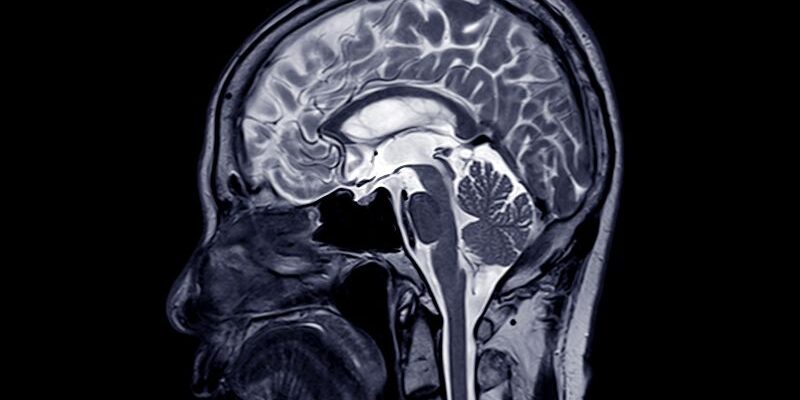
Because these proteins are specific to brain cell injury, elevated levels in a blood sample can indicate that a brain injury occurred–a very different kind of evidence than the structural, “is there visible damage” picture that a CT or MRI provides.
The pivotal clinical study behind this–ALERT-TBI–enrolled more than 1,900 patients at 24 sites across the U.S. and Europe and compared blood test results against head CT findings. Funding for it came jointly from Banyan Biomarkers and the U.S. Army Medical Research and Materiel Command. The test correctly predicted the presence of intracranial lesions about 97.5% of the time, and correctly identified patients without such lesions roughly 99.6% of the time.
FDA clearance and where the technology stands now
In February 2018, the FDA cleared the first blood test built on this research–Banyan Biomarkers’ “Brain Trauma Indicator”–making it the first blood test authorized to help evaluate adults with suspected mild TBI. The FDA specifically credited its Breakthrough Devices Program, developed in coordination with the Department of Defense, for expediting the review.
Since then, the field has expanded. Abbott received clearance in January 2021 for a handheld version of the same GFAP/UCH-L1 test on its i-STAT platform, and other manufacturers, including bioMérieux, have since brought comparable tests to market. A 2019 cost-effectiveness analysis found the original test would be cost-effective for avoiding unnecessary CT scans if priced at $309 or less–a sign of how the technology is increasingly being evaluated not just for accuracy, but for its role in reducing unnecessary imaging and radiation exposure.
An important caveat
It’s worth being precise about what these tests are cleared to do: help predict whether a CT scan is likely to show a structural abnormality, primarily to help clinicians decide whether a scan is necessary at all. They are not a general-purpose “proof of brain injury” test, and using biomarker results outside their studied clinical context is an area of active research, not settled science. Adoption has also been slow–new diagnostic evidence typically takes over a decade to work its way into routine clinical practice, a lag well documented in health services research independent of TBI specifically.
Still, the underlying shift is real: a diagnostic approach developed to solve a battlefield triage problem is now reshaping how brain injury is evaluated well beyond the military that funded it.
Kansas City Advanced Imaging – Get In. Find Out™.
At KCAI, we believe meaningful change starts with the right support, guidance, and environment. Whether you’re exploring new paths for personal growth, seeking deeper understanding, or looking for solutions tailored to your unique journey, our team is here to help you move forward with confidence.
Every step you take matters, and we’re committed to helping you make the most of it. Reach out today to learn how we can support your goals and help you create lasting, positive change.
Ask your physician about referring to Kansas City Advanced Imaging for same-day or next-day MRI scheduling. Schedule yours today.
Sources: Characteristics and Impact of U.S. Military Blast-Related Mild TBI, PMC; Blast-Related TBI: Current Concepts, PMC; FDA approves Banyan Biomarkers’ TBI blood test, UF Research; ALERT-TBI study, PubMed; UCH-L1 and GFAP Testing, AAFP; The answer is 17 years, J R Soc Med / PMC
This post is for general educational purposes and isn’t medical advice. Decisions about diagnostic testing should be made with a qualified medical provider.