When someone hits their head hard enough to worry about it, the standard path is a trip to the emergency room, maybe a CT scan, and a diagnosis one way or the other. It feels like a clean process. The research says otherwise.
Traumatic brain injury (TBI) is far more common than most people realize–U.S. emergency departments handle roughly 2.5 million TBI-related visits, hospitalizations, or deaths in a given year, and the CDC has noted that a large majority of those injuries are classified as “mild.” That word does a lot of unearned work. Mild refers to the initial severity grading, not to how the injury actually plays out for the person living with it.
The numbers on missed diagnoses
Several independent studies, using different methods and different patient populations, have converged on the same uncomfortable conclusion: a substantial share of brain injuries are never formally diagnosed at the point of care.
- A retrospective chart review of over 1,600 emergency department patients who received a head CT found that only 47% of those who met established clinical criteria for TBI actually received a documented TBI diagnosis in their medical record.
- An earlier study published in Archives of Physical Medicine and Rehabilitation reviewed 197 ER patients and found that emergency physicians failed to diagnose a head injury or concussion in 56% of patients who were later confirmed to have one.
- Estimates of undiagnosed TBI in various ED populations have ranged from roughly 11% to as high as 75%, depending on the study population and how rigorously TBI was defined.
Different methodologies, different eras, different hospitals–and the pattern holds. Missed diagnosis isn’t a fluke; it’s a structural feature of how these injuries are currently evaluated.
Why it happens
Part of the answer is triage priorities. Emergency medicine is built to catch and treat the most immediately life-threatening problem in the room. If a patient has a visible fracture, an open wound, or another dominant orthopedic injury, that tends to absorb clinical attention, and a milder brain injury underneath it can go unexamined.
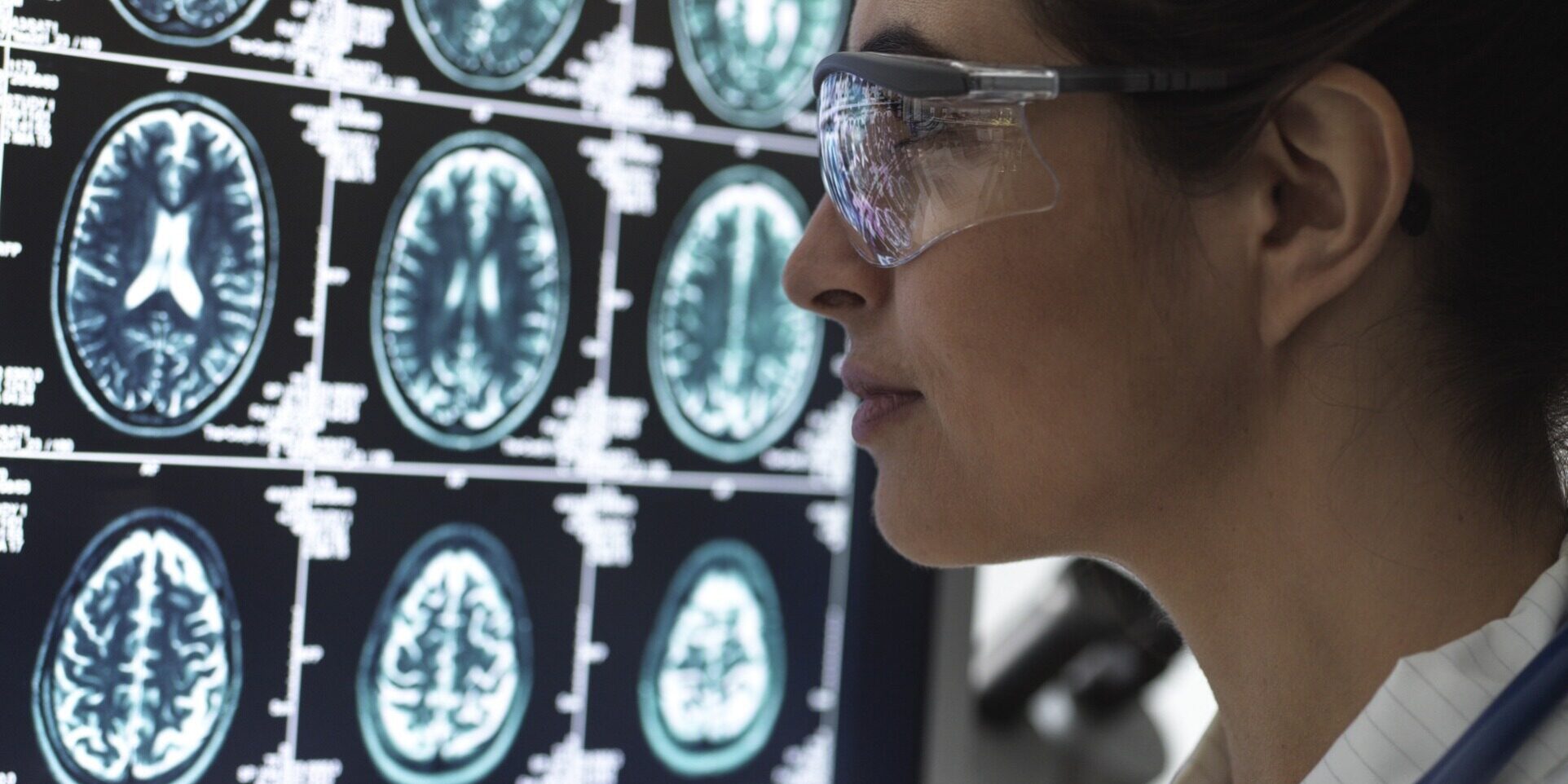
Part of it is also the tools themselves. Roughly 90% of ED patients evaluated for TBI who receive a head CT show no visible abnormality on the scan. That doesn’t mean nothing happened–it means CT is built to detect a specific category of damage (bleeding, swelling, structural disruption) and is simply not designed to see the kind of diffuse, microscopic injury that characterizes most mild TBI. A negative CT is frequently treated, in practice, as equivalent to “no brain injury,” even though that’s not what a negative CT actually establishes.
Why the gap matters
An injury that isn’t diagnosed doesn’t get followed up on. Patients aren’t told what symptoms to watch for, aren’t referred to rehabilitation or neuropsychological care, and often spend months attributing headaches, fatigue, irritability, or memory lapses to stress or unrelated causes–because no one told them otherwise.
This is the real cost of the diagnostic gap: not just a missing line in a chart, but a missed opportunity to manage a real injury early, when management tends to matter most. The research on newer diagnostic tools–blood-based biomarkers, advanced imaging, and structured symptom batteries–is largely a response to this exact problem, and it’s worth understanding what those tools can and can’t do. We’ll cover that in the posts that follow.
Kansas City Advanced Imaging – Get In. Find Out™.
At KCAI, we believe meaningful change starts with the right support, guidance, and environment. Whether you’re exploring new paths for personal growth, seeking deeper understanding, or looking for solutions tailored to your unique journey, our team is here to help you move forward with confidence.
Every step you take matters, and we’re committed to helping you make the most of it. Reach out today to learn how we can support your goals and help you create lasting, positive change.
Ask your physician about referring to Kansas City Advanced Imaging for Same Day or Next Day MRI scheduling. Schedule yours today.
Sources: Discordance between Documented Criteria and Documented Diagnosis of TBI in the ED, PubMed; Accuracy of Mild TBI Diagnosis coverage, Archives of PM&R via Schuelke Law; Emergency Department Evaluation of TBI in the United States, PMC; Prevalence of TBI in an ED population, ScienceDirect