
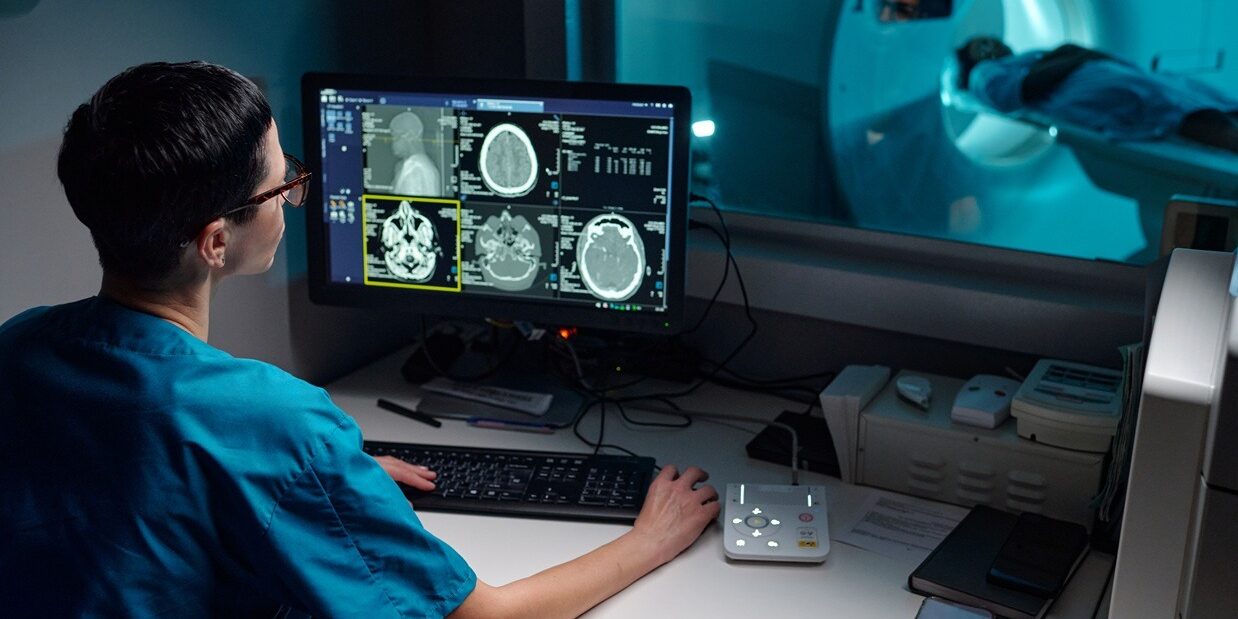
An MRI scan, short for Magnetic Resonance Imaging, is a non-invasive medical imaging technique used to create highly detailed images of the inside of the body. Unlike X-rays or CT scans, MRI does not use radiation.
Instead, an MRI relies on powerful magnets and radio waves to generate images, making it a safe and widely used tool in modern healthcare. Let’s take a closer look at some MRI basics.
How Does an MRI Work?
MRI technology works by using a strong magnetic field to align hydrogen atoms in the body. When radiofrequency pulses are applied, these atoms emit signals that are captured by the scanner. A computer then processes these signals into detailed images of organs, tissues, and structures inside the body.
Because the human body is made up largely of water, and water contains hydrogen atoms, MRI scans are especially effective at visualizing soft tissues. This includes areas like the brain, muscles, ligaments, and internal organs–structures that can be more difficult to see with other imaging methods.
What Is an MRI Used For?
MRI scans are incredibly versatile and are used to diagnose and monitor a wide range of conditions. Some of the most common uses include:
- Evaluating brain and spinal cord conditions
- Detecting tumors or abnormal growths
- Assessing joint injuries, including ligaments and cartilage
- Examining heart and blood vessel health
- Monitoring diseases such as multiple sclerosis or stroke
Because of its ability to produce high-resolution images, MRI is often the preferred option when doctors need a closer look at soft tissue structures.
What to Expect During an MRI Scan
If you’ve never had an MRI before, the process may seem intimidating, but it is generally straightforward and painless. During the scan, you will lie on a table that slides into a large, tube-shaped machine. The machine makes loud tapping or thumping noises while it operates, but you may be given earplugs or headphones to help reduce the sound.
It’s important to remain still during the scan to ensure clear images. Depending on the area being examined, the procedure typically takes anywhere from 15 minutes to an hour. In some cases, a contrast dye may be used to enhance image clarity, which is administered through an IV.
Is an MRI Safe?
MRI scans are considered very safe for most people. Since they do not use ionizing radiation, they carry fewer risks compared to some other imaging methods. However, because MRI machines use strong magnets, patients with certain metal implants, such as pacemakers or metal fragments, should inform their healthcare provider beforehand.
Why MRI Matters
MRI technology plays a critical role in early detection and accurate diagnosis. By providing detailed images of the body’s internal structures, it helps healthcare professionals make informed decisions about treatment and care.
Understanding what an MRI scan is and how it works can help reduce anxiety and make the experience more comfortable. If your provider recommends an MRI, you can feel confident knowing it is a safe, effective, and powerful diagnostic tool designed to support your health and well-being.
Kansas City Advance Imaging – Get In. Find Out™.
At KCAI, we believe meaningful change starts with the right support, guidance, and environment. Whether you’re exploring new paths for personal growth, seeking deeper understanding, or looking for solutions tailored to your unique journey, our team is here to help you move forward with confidence.
Every step you take matters, and we’re committed to helping you make the most of it. Reach out today to learn how we can support your goals and help you create lasting, positive change.
Unlike many imaging clinics, we offer same and next day MRIs–schedule yours today.