
You were in an accident. Maybe it was a car crash, a fall, a sports collision, or something that didn’t even seem that serious at the time.
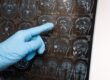
You went to the ER. They ran tests. The CT scan came back normal. Maybe a standard MRI too. The doctors told you there was nothing structurally wrong.
And yet.
The headaches won’t quit. You walk into a room and forget why you went in. Reading feels harder than it used to. You’re short-tempered in ways that aren’t like you. Bright lights bother you. Loud sounds feel like too much. You wake up exhausted no matter how long you sleep.
You know something is wrong. You’ve known it since the day of the injury.
But the scans say you’re fine.
The Gap Between “Normal” and Fine
Here’s something important that doesn’t get explained enough: a normal CT scan or conventional MRI does not mean your brain is uninjured.
These scans are remarkable tools. In an emergency room, a CT scan can identify life-threatening bleeding, fractures, or swelling in minutes. That matters enormously.
But here’s what they weren’t designed to do: see the microscopic damage that happens in a mild traumatic brain injury (mTBI).
When your head experiences a sudden impact – from a collision, a fall, a whiplash force – the brain can twist and shift inside the skull. That motion stretches and strains the brain’s internal wiring: microscopic nerve fibers called axons that carry signals between different regions of the brain. This type of injury is called diffuse axonal injury, and it happens at a scale far too small for conventional imaging to detect.
In fact, studies show that the vast majority of people with mild TBI somewhere between 85 and 99 percent – will have a completely normal CT scan. Normal. Despite real injury. Despite real symptoms.
So if your scan was normal and you’re still suffering, you are not imagining it. You are not being dramatic. You are not weak. You may simply have an injury that standard imaging was never built to find.
The Brain’s Wiring System
Think of your brain like a city.
The gray matter, the thinking and processing parts are the buildings. But what connects all those buildings is an enormous network of roads and communication lines. In the brain, those are called white matter tracts: bundles of axons that carry information from one region to another, constantly, at remarkable speed.
When those pathways are disrupted – even microscopically – the communication slows down. Signals that used to travel instantly now take longer, or get lost. And that disruption can show up as exactly the kinds of symptoms you may be experiencing: cognitive fog, slowed thinking, memory trouble, emotional dysregulation, fatigue, headaches.
The injury is real. The wiring is damaged. The scans just couldn’t see it.
A Different Kind of Imaging
This is where an advanced technique called Diffusion Tensor Imaging (DTI) becomes important.
DTI is a specialized form of MRI that measures something conventional scans don’t: how water moves through the brain’s white matter pathways. In healthy, intact axons, water tends to move in organized, directional patterns. When those axons have been disrupted, the water movement becomes less organized and DTI can detect that difference.
It’s not a perfect test, and it doesn’t replace a physician’s full evaluation. But when performed on a high-quality 3T MRI system with the right protocols, DTI can reveal subtle white matter abnormalities that conventional imaging simply misses.
For many patients, a DTI scan is the first time an image has reflected what they’ve been experiencing all along.
You Deserve a Complete Picture
If you’re living with persistent symptoms after a head injury and your conventional imaging has come back normal you don’t have to stop there.
Kansas City Advanced Imaging (KCAI) offers advanced 3T MRI with DTI protocols specifically designed to support the evaluation of traumatic brain injury and post-concussive symptoms. Whether your injury happened in a vehicle accident, a fall, on the field, or anywhere else, advanced neuroimaging may provide answers that standard scans couldn’t.
You’ve been telling people something is wrong. It’s time for imaging that can listen.
Kansas City Advance Imaging
Get In. Find Out.™
At KCAI, we believe meaningful change starts with the right support, guidance, and environment. Whether you’re exploring new paths for personal growth, seeking deeper understanding, or looking for solutions tailored to your unique journey, our team is here to help you move forward with confidence.
Every step you take matters, and we’re committed to helping you make the most of it. Reach out today to learn how we can support your goals and help you create lasting, positive change.
Unlike many imaging clinics, we offer same-day and next-day MRIs–schedule yours today.