
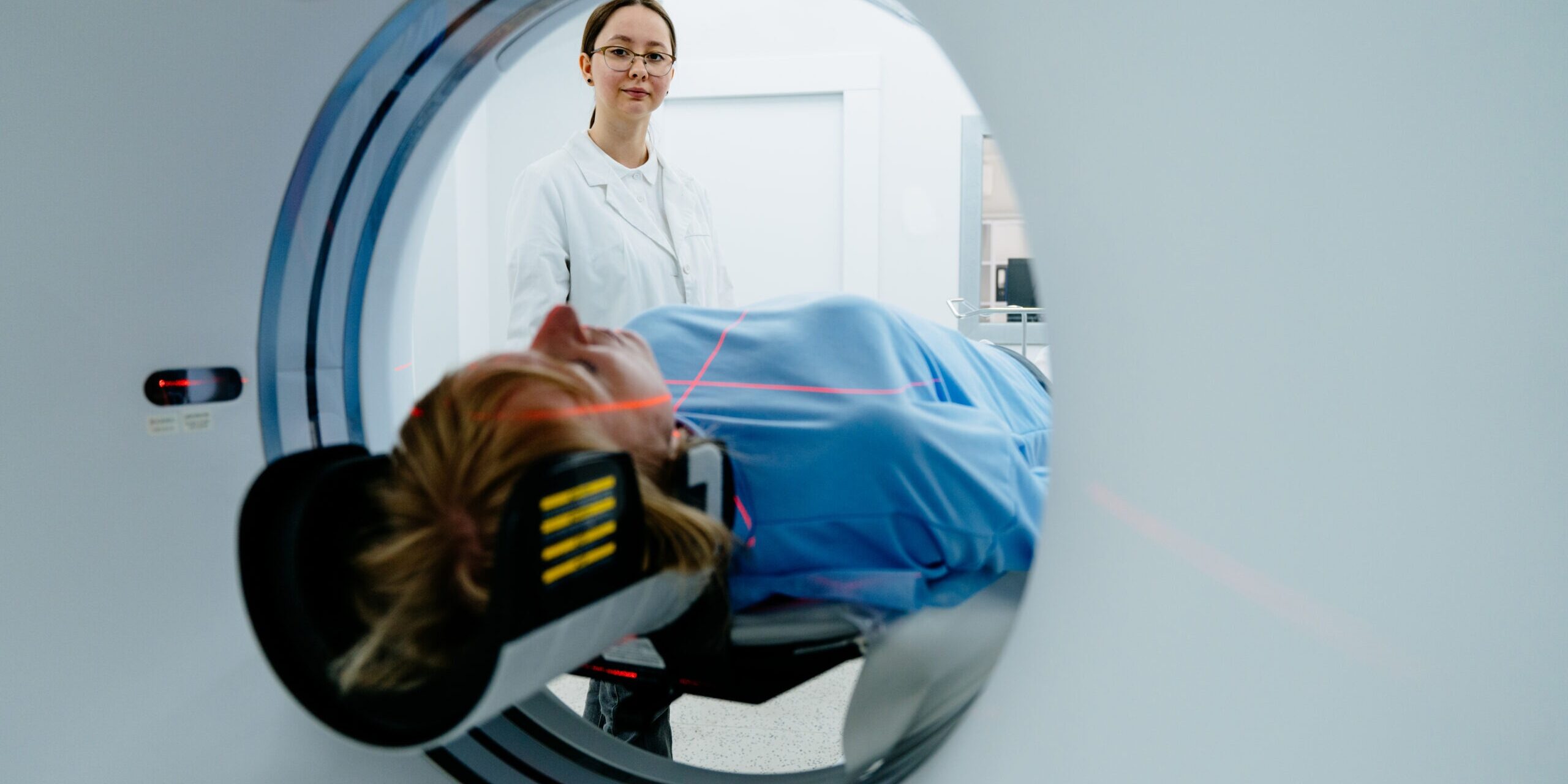
Joint injuries are common after falls, sports accidents, repetitive strain, and everyday activities. When pain, swelling, stiffness, or limited movement persists, imaging may be needed to determine what is happening inside the joint. Two of the most commonly used imaging options are X-rays and magnetic resonance imaging (MRI).
While both can provide valuable information, they are designed to show different structures. Understanding the difference between an MRI and an X-ray can help patients know why one test may be recommended over another for a joint injury.
What Does an MRI Show?
MRI uses a powerful magnetic field and radio waves to create detailed images of structures inside the body. Unlike X-rays, MRI does not use ionizing radiation.
One of MRI’s major advantages for joint injuries is its ability to visualize soft tissue. An MRI can provide detailed images of ligaments, tendons, muscles, cartilage, and other structures surrounding a joint.
This makes MRI particularly useful for evaluating injuries such as ACL tears in the knee, rotator cuff injuries in the shoulder, tendon damage, cartilage injuries, and other conditions that may not be clearly visible on an X-ray.
MRI can also show bone marrow and subtle changes within bones, potentially providing additional information when symptoms continue despite an inconclusive X-ray.
What Does an X-Ray Show?
X-rays are particularly effective at creating images of bones. For a joint injury, an X-ray may be ordered when a healthcare provider suspects a fracture, dislocation, bone abnormality, or certain forms of arthritis.
Because X-rays can quickly reveal changes in bone structure, they are often one of the first imaging tests performed after an acute injury. For example, someone who falls and experiences severe ankle or wrist pain may receive an X-ray to determine whether a bone has been broken.
However, X-rays have limitations. They do not provide the same level of detail for soft tissues such as muscles, tendons, ligaments, and cartilage. An X-ray may appear normal even when a significant soft tissue injury is present.
When Might an MRI Be Recommended?
An MRI may be appropriate when a healthcare provider suspects damage involving the ligaments, tendons, cartilage, or other soft tissues. It can also be useful for evaluating persistent joint pain when the cause is unclear.
For example, a knee X-ray may show that the bones are intact, but an MRI could reveal a torn meniscus or ligament injury. Similarly, shoulder pain that does not show an obvious cause on an X-ray may require MRI imaging to evaluate the rotator cuff and surrounding tissues.
When Is an X-Ray Usually Used First?
For many joint injuries, an X-ray is the initial imaging test. It is fast, widely available, and highly effective for identifying fractures and problems involving bone alignment.
If the X-ray identifies the cause of the symptoms, additional imaging may not always be necessary. However, when pain or instability continues and an X-ray does not provide an explanation, an MRI may be recommended to investigate the soft tissues in greater detail.
MRI vs. X-Ray: Which Is Better for Joint Injuries?
Neither test is universally better. The right imaging method depends on the type of injury and the structures that need to be evaluated.
X-rays are generally best for examining bones and detecting fractures or dislocations. MRI provides a more detailed view of soft tissues and complex structures within the joint. In some cases, the two tests complement each other, giving healthcare providers a more complete picture of an injury.
Choosing the appropriate imaging test can help identify the source of joint pain and provide the information needed to determine the next steps in treatment and recovery.
Kansas City Advanced Imaging
Get In. Find Out.™
At KCAI, we believe meaningful change starts with the right support, guidance, and environment. Whether you’re exploring new paths for personal growth, seeking deeper understanding, or looking for solutions tailored to your unique journey, our team is here to help you move forward with confidence.
Every step you take matters, and we’re committed to helping you make the most of it. Reach out today to learn how we can support your goals and help you create lasting, positive change.
Unlike many imaging clinics, we offer same-day and next-day MRIs–schedule yours today.